

Being Alive
Body and Nature-Connected Practices
with Dr Hannah McNeilly
I work with people who have spent years functioning, being responsible and care for others, and who now feel depleted, disconnected, or out of rhythm with themselves.
Offering structure and support, I invite you to pay attention to your senses and reconnect with yourself and the natural world. Rather than analysing or fixing, this work is experiential—supporting the return of clarity, presence, and a sense of ease.
This approach is especially suited to healthcare professionals, educators, and others in high-responsibility roles who are looking for a restorative way forward without pushing harder.

Working in health, care, or education and being responsible for others (whether patients, clients, students, teams, or children) can be very demanding, and for many has become draining and unsustainable.
When days are rushed and attention is pulled in many directions, our most vibrant aspects — our rich inner lives — can fade from view, even though they are at the core of our strength, vitality, and sense of meaning, and are often what first drew us to our work.
Mindful nature and body-connected practices offer space to slow down and to gently unearth the treasures that lie under the surface of everyday functioning.

Chronic stress is not a sign of personal weakness. It shows that structural pressures are pushing people beyond sustainable limits. This can lead to depletion, a sense of alienation from oneself and one’s work, and a loss of presence in relationships.
Forest therapy and somatic movement offer ways to reconnect with yourself through attentive engagement with nature and with your own body. These practices support grounding and clarity, helping you to sense what matters, recognise patterns of depletion, and explore possibilities for change within a supportive space.
This work responds to the urgency to support the wellbeing of healthcare professionals, educators, and carers. It is grounded in a strong evidence base demonstrating the benefits of nature connection and mindful movement for reducing stress, restoring attentional capacity, and supporting sustainable care.
Nature connection and Bodywork:
Practices of Aliveness
Nature connection and somatic movement offer ways of unlearning rushing and functioning and re-entering a more attentive, embodied way of being. These practices invite slowing down, sensing, and reconnecting with nature and with oneself.
I offer guided nature connection sessions, somatic movement practice, and seasonal formats that weave the two together. These practices help to notice patterns of depletion, restore a sense of grounding, and reconnect with what feels nourishing and meaningful.
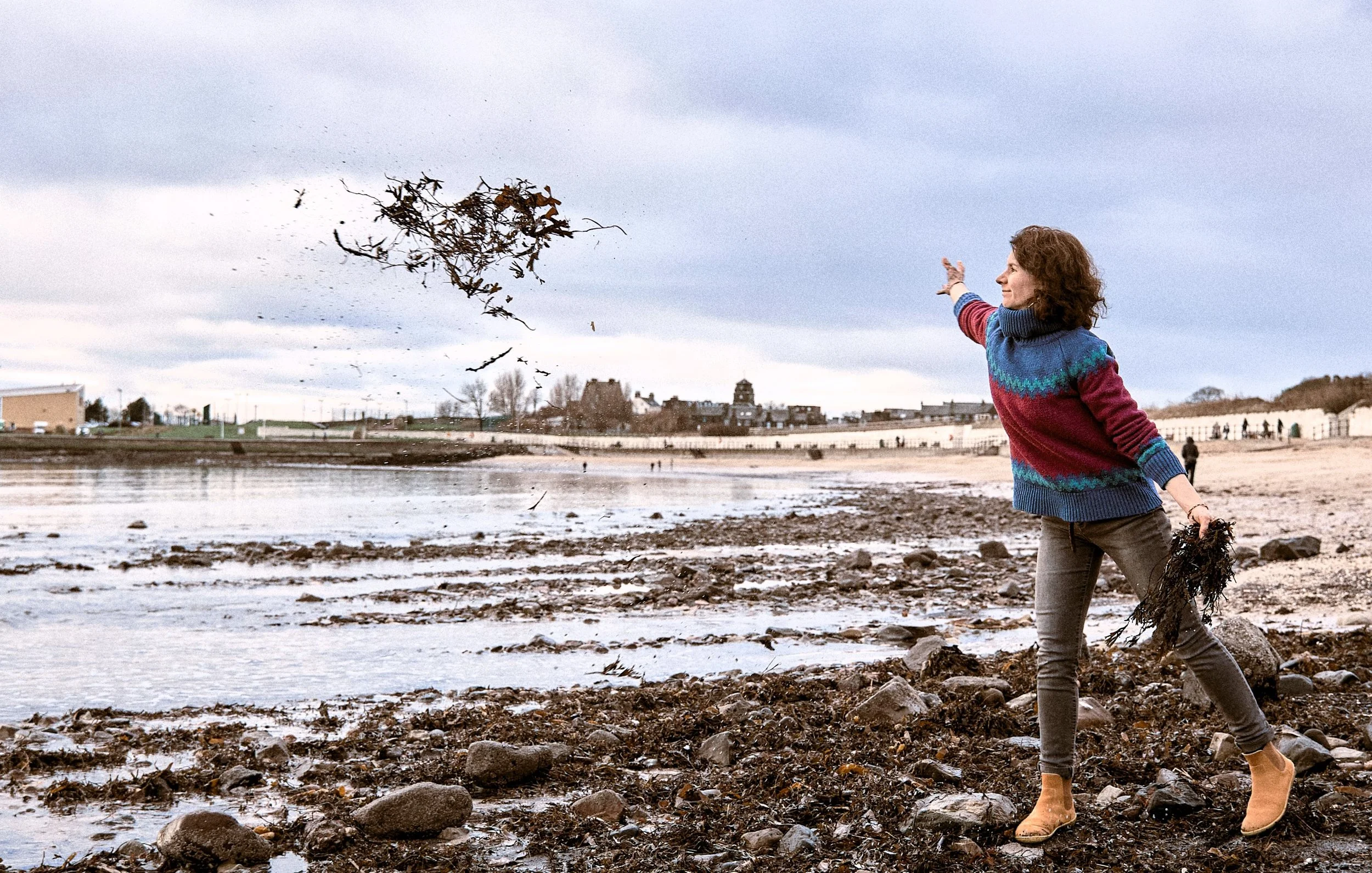
Nature connection is an immersive, relational practice that supports wellbeing through attentive engagement with the environment. Research shows that time spent in such forms of guided nature engagement can reduce stress and support restoration. My work draws on the Forest Therapy Hub method, which offers a structured yet responsive way of designing mindful nature-based practices that support health and vitality.
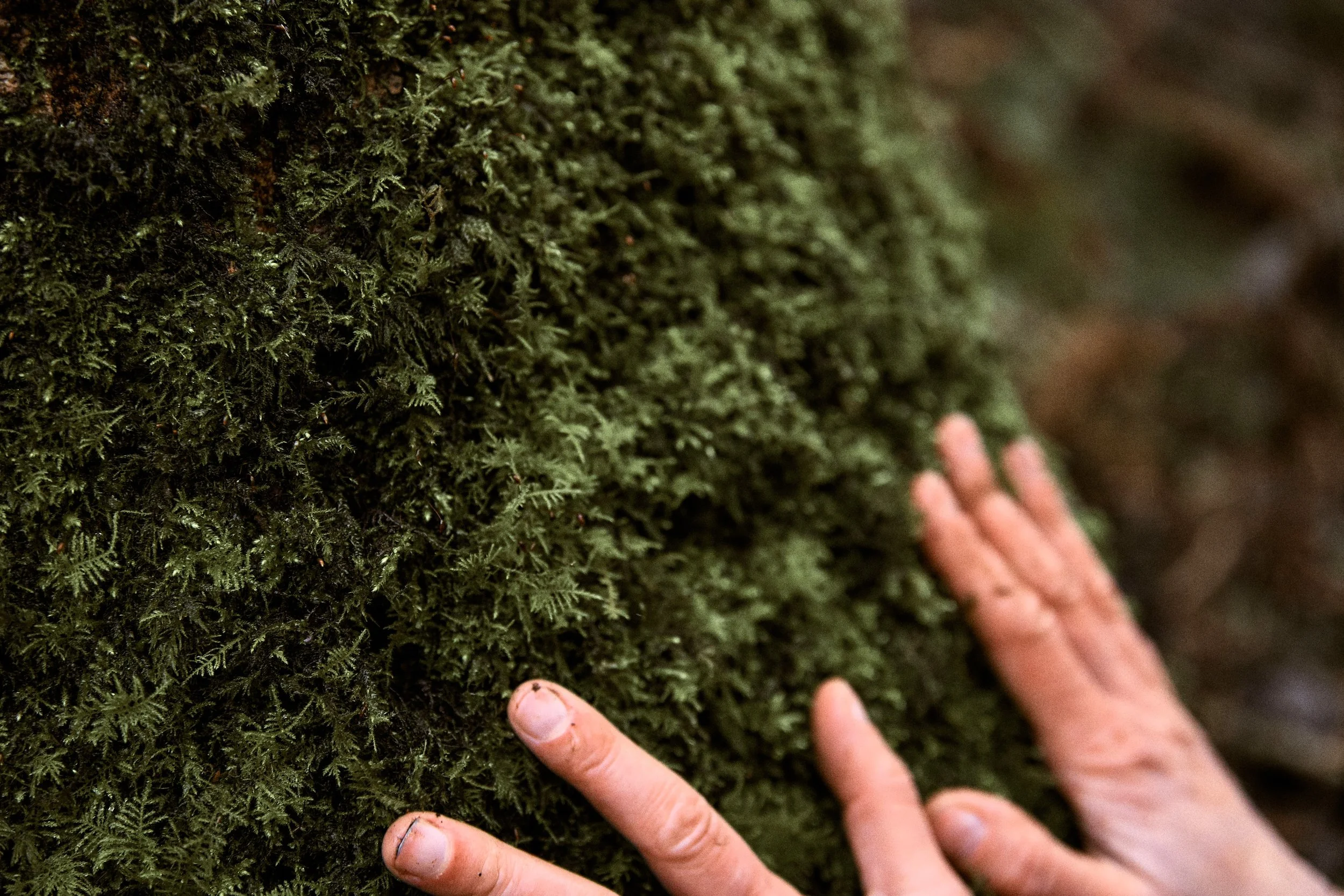
Somatic movement focuses on cultivating dialogue within the body through gentle, attentive movement and sensing. This approach supports ease, clarity, and awareness. My practice is informed by Physio-Mental Development (Physio-Mentaler Entwicklung, PME), a holistic, client-centred method developed by Dieter Rehberg, which emphasises learning through sensing rather than through correction or performance.
Together, these practices support people in meeting stress and strain with greater presence and responsiveness. Rather than offering quick fixes, they open up ways for reflection, reorientation, and sustainable change.

What I do not offer: I do not provide psychotherapy, spiritual teaching, or medical treatment.
Rewild yourself!
When large parts of our work and social lives take place in non-natural environments, on screens, and under time pressure, shutting down our sensory awareness is a common (and often necessary) adaptation strategy. It helps us to block out the discomfort of getting through the day with lack of sleep, sitting on at the computer for long hours, not eating well, and focussing on everyone else’s wellbeing except our own.
To me, this feels like stepping into ‘robot mode’. In effect, we become numb as to get the daily job done. And it works. We work. Until we don’t. In the long run, we lose touch with the most precious force we have, our vitality, our sense of presence in the world.

Rewilding yourself is an invitation to come back to your senses. It allows you to slow down and perceive what usually goes unnoticed… The beauty of the cracked bark of an oak tree. The tenderness of a young snail with a body still half-translucent. The steady rhythm of your own breathing.
Rewilding yourself is a return to what has always been wild within you - that spark that could not be extinguished in higher education; that deep need for rest that remains even after a holiday; and that zest for life that cannot be expressed in a board meeting.
It’s what reminds us that we are more than work machines. We are living beings, fierce and delicate, woven into a wonderful shimmering web of life.

Evidence-informed practice
It is not surprising that healthcare professionals and academics are experiencing record levels of chronic stress and burnout. Staff shortages, long work hours, increasing administrative tasks, and the repercussions of the pandemic are taking their toll on physical and mental health, work performance, and life satisfaction.
In the UK, 45% of NHS staff reported having felt unwell due to work-related stress in the past month, and 57% said that they came to work in the past three months despite not feeling fit for work (NHS staff survey 2022). And in a recent survey, over half of academic staff in HE showed signs of depression (Wray and Kinman 2021).
The roots of the problem are structural, and the symptoms ripple through all levels; from systems and institutions to teams and individual bodies.
Forest Therapy has been shown to have significant positive physiological and psychosocial effects that counteract stress and burnout (systematic review Rajoo et al. 2020). Mindful forest walks significantly reduce cortisol levels (systematic review Antonelli et al. 2019), improve cardiovascular function (Farrow et al. 2019), and promote positive mood while reducing anxiety (Chen et al. 2018).
Physiological effects of somatic movement have been less researched, but the profound impact of mindfulness on physical activity and health-promoting behaviour have been widely documented (Roychowdhury 2021).

Curious? Any questions? Let’s have a chat: info@coille.scot
